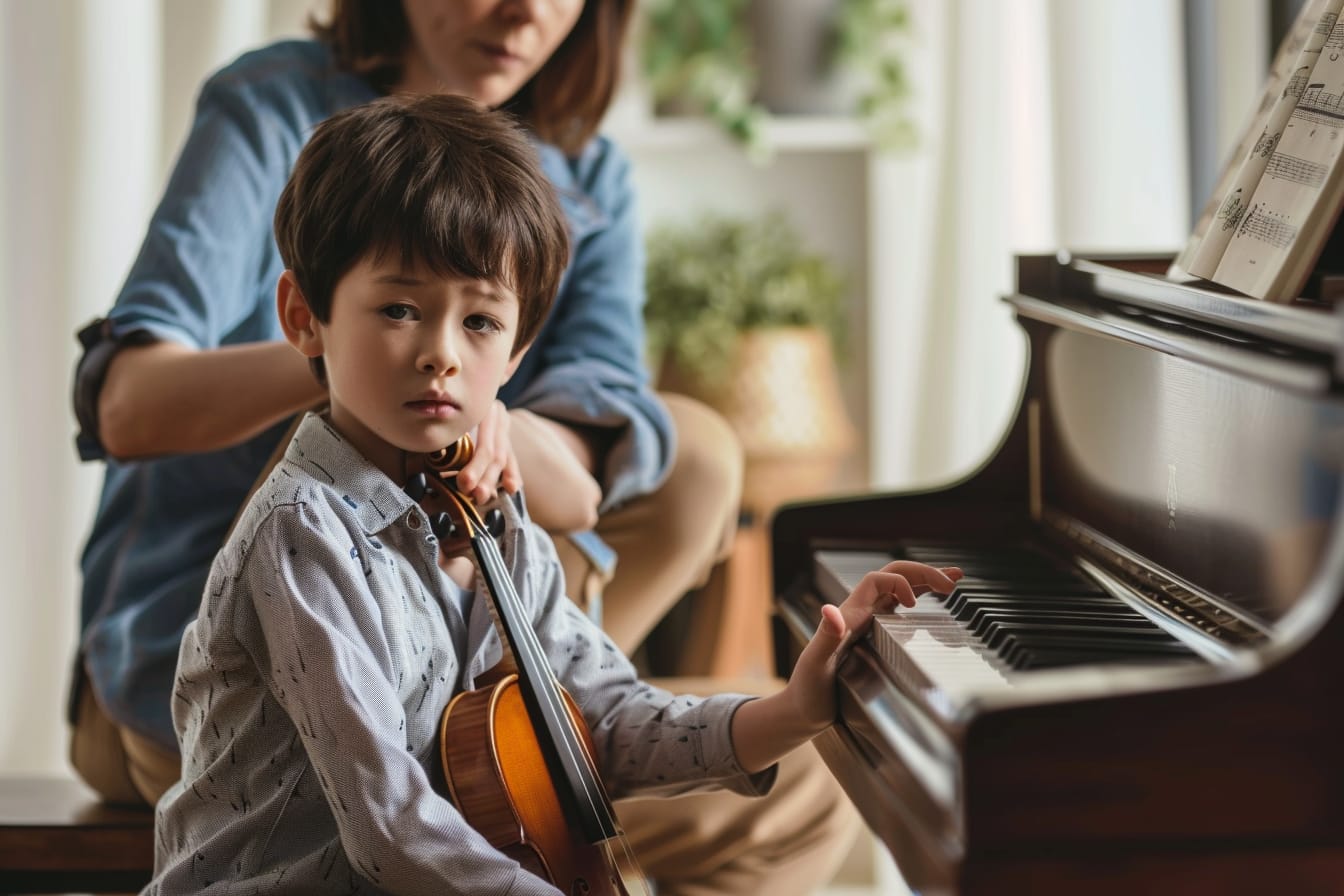

There’s a quiet myth that haunts music students and their parents: the idea that “serious practice” only begins when a child sits down for an hour or more, perfectly focused, perfectly ready, perfectly motivated. And until then? It doesn’t count.
But here’s the truth, as any seasoned teacher or musician will tell you: short, imperfect, consistent practice beats long, perfect, occasional practice—every time.
The Magic of Repetition, Not Duration
Learning music is not like cramming for a test. The brain processes music through repetition, pattern recognition, and muscle memory. And those mechanisms love frequency, not length.
Five minutes of daily focused work on a difficult passage will build neural connections far more effectively than one intense hour at the end of the week. That’s because the brain, like a sponge, absorbs more from little and often than from big and rare.
Perfection Is the Enemy of the Piano Bench
Children are especially vulnerable to perfectionism. If a child thinks practice only “counts” when they feel great, play without mistakes, and sound like a YouTube prodigy, they’ll avoid the bench. Or sit on it in fear.
But what if we redefined success?
- “You sat down. That counts.”
- “You played one scale today. That’s progress.”
- “You played even though you were tired. That’s discipline.”
Short sessions remove the pressure. They lower the stakes. They make it easier to begin. And once you begin, something clicks—and you often play longer than you intended.
The 10-Minute Win
Research in music education (and broader cognitive science) shows that 10–15 minutes a day of focused practice builds more durable skills than infrequent marathon sessions. This is especially true for younger children whose attention spans are still developing.
Short sessions also:
- Fit easily into family routines
- Keep motivation high
- Make it easier to build habits
- Allow more opportunities for review and reflection
One music teacher calls it “snack practice” instead of “meal practice.” Just enough to feed the brain—and keep hunger alive.
Practice Is Not Just About Sound
Some of the most effective practice happens away from the instrument. Mentally reviewing a piece. Tapping out rhythms on a desk. Visualizing fingerings. Singing the melody while brushing teeth.
These micro-moments deepen musical memory. And they don’t need to be perfect. They need to be present.
For Parents: The Power of the Gentle Nudge
Parents often struggle with encouraging practice without becoming the villain. But when practice becomes short, approachable, and habit-based, conflict fades.
Instead of “Did you practice your full 30 minutes?” try:
- “Want to play me your favorite part?”
- “Let’s just do five minutes together.”
- “Play something to match how your day felt.”
Suddenly, practice becomes connection—not correction.
When to Add Time
As students grow and pieces become more complex, yes, they’ll need longer sessions. But those sessions will be earned, not forced. By then, the child will already know what it feels like to sit down with their instrument and make progress. They won’t need to be convinced—just guided.
The Finish Line Is Built with Tiny Steps
The most successful musicians, young or old, aren’t the ones who practice perfectly. They’re the ones who show up. Again and again. For ten minutes. For fifteen. Even when it’s messy. Even when they’re tired. Even when it’s just one scale.
Music isn’t about perfection—it’s about presence. And sometimes, five minutes is enough to say, “I showed up for my music today.”
And that’s where real talent begins.