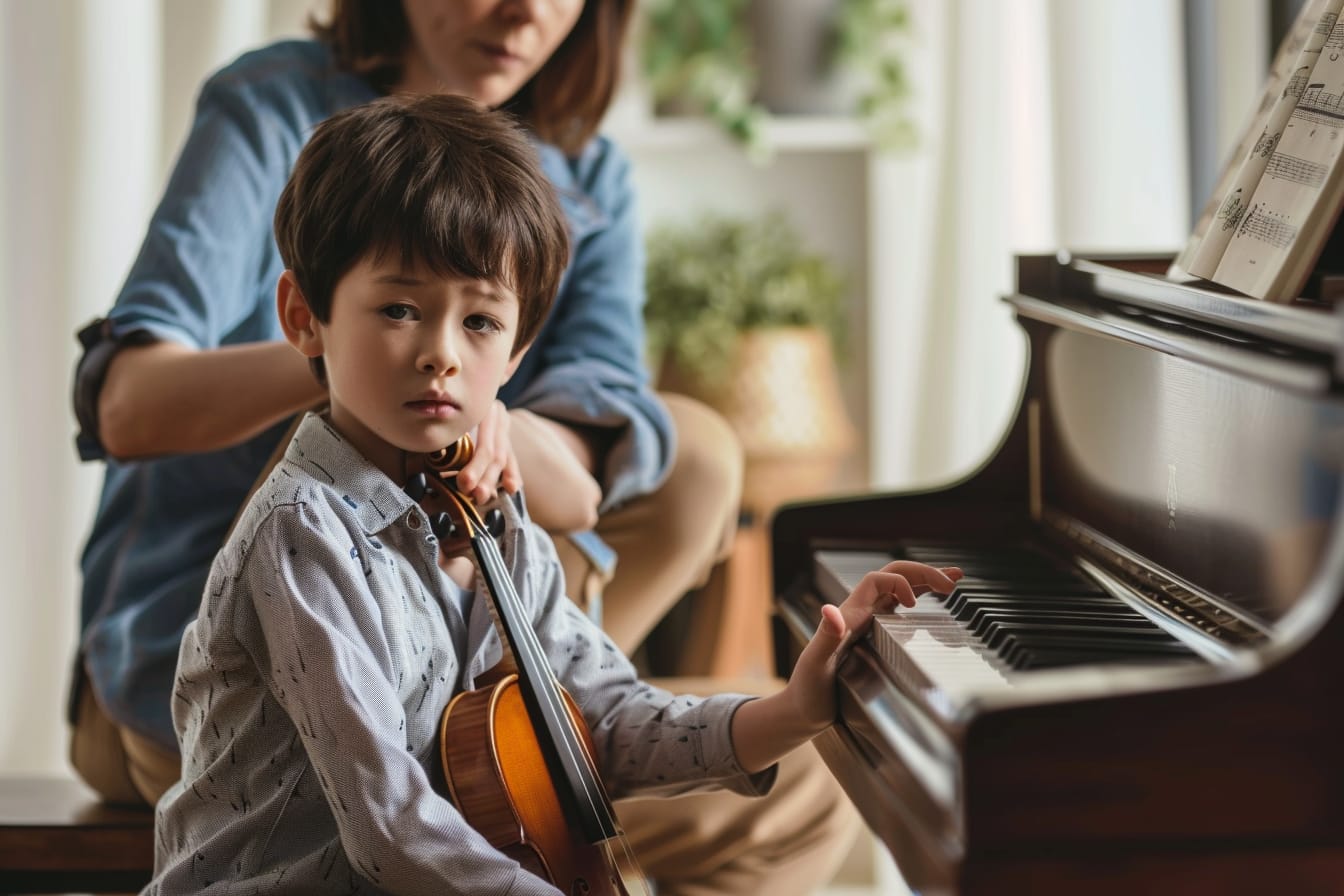

Without the Tears
If you've ever heard the words “Do I have to practice today?” echoing through your home, you're not alone. Practicing music daily can feel like an uphill battle—for the child, the parent, and sometimes even the teacher. But behind every concert, recital, and proud moment stands a quiet truth: consistency matters more than talent.
So, how do we transform music practice from a chore into a cherished daily rhythm?
Start With Why: Make the Music Personal
Children are naturally curious, but not always naturally disciplined. That’s okay—discipline is something they learn. What comes first is connection.
Instead of saying “You have to practice because I paid for lessons,” try helping them discover what music means to them. Maybe they want to play the theme from their favorite movie, or impress their grandparent, or join the school band with their friends. Find the emotional thread and tug gently on it. Motivation rooted in personal meaning lasts much longer than obligation.
Create Ritual, Not Routine
Kids don’t thrive on nagging—they thrive on predictable rhythms. Create a music “ritual” instead of a chore list. Maybe it’s always after breakfast. Maybe it’s right before story time. Keep the time short and sacred—just 10 to 20 focused minutes a day is enough to build progress, especially for beginners.
Lighting a special candle, having a “music snack,” or using a sticker chart to track consistency can turn the moment into something cozy and fun.
Celebrate Small Wins
Don’t wait for the recital to offer praise. Daily victories deserve recognition too. Celebrate a clean scale, a new piece started, or even just five minutes of focused effort without fussing.
Children need to see and hear their progress, and they’ll work harder when they feel proud. You don’t need to be a musician yourself to say, “I noticed that was smoother than yesterday. That sounded clearer. You’re improving.” That’s gold.
Shift Focus: Practice Doesn’t Mean Perfection
One major demotivator is the feeling that practicing means getting it right. Help your child reframe it: practice means learning, not performing. Mistakes are part of the process, not signs of failure.
Even the best musicians in the world spend most of their time practicing slowly, awkwardly, imperfectly. That’s the point. Practicing is where we allow ourselves to grow.
Let Them Hear What’s Possible
One of the simplest ways to motivate a child is to let them listen. Listening to professional recordings of their instrument—especially of children their age playing well—can reignite inspiration. Hearing a young cellist or trumpet player shine can turn “I don’t want to” into “I want to sound like that.”
Involve the Teacher—And the Audience
A great teacher knows how to spark interest, assign the right material, and create practice goals that feel achievable. They can also help you understand when to push and when to pause.
And don’t forget the power of an audience. Even a living room performance for family or friends gives a sense of purpose to the practice. Music is meant to be shared.
Tips in a Nutshell (for You, the Grown-Up)
- Set a specific, regular time every day, even if short.
- Focus on consistency, not length. Ten minutes daily beats one hour once a week.
- Let your child choose pieces sometimes, even if they’re silly or simple.
- Stay nearby without hovering. Be the calm presence, not the drill sergeant.
- Use charts, visual cues, and rewards, especially for younger children.
Practice Builds More Than Music
Daily music practice isn’t just about playing an instrument. It builds patience, resilience, self-confidence, and emotional expression. It teaches kids to show up, even on days they don’t feel like it—and that’s a lesson that will echo long after the music fades.
The goal isn’t to raise a prodigy. It’s to give a child the lifelong gift of creativity, self-discipline, and the quiet joy of saying: I worked at this. I’m getting better. I can do hard things.
And with your support, they absolutely can.