A Story of Voice, Harmony, and Understanding
When 14-year-old Lena first came to her singing teacher, she had a voice that could turn heads—a natural tone, perfect pitch, and the kind of raw expression that made listeners pause. She dreamed of singing on big stages, of interpreting the great songs of the world. But after six months of lessons, she hit a wall.
It wasn’t vocal technique.It wasn’t breathing or tone.It was musical understanding.
Lena could sing beautifully—but she couldn’t explain what she was singing. She struggled to follow harmony, couldn’t sight-read a melody, and had no idea how to communicate with the accompanist. Her teacher gently asked,
“Have you ever thought of learning piano?”
Lena frowned. “But… I’m a singer. Not a pianist.”
The teacher smiled. “Exactly. And that’s why you need one.”
Singing Is Music. Music Is Structure.
Many singers start with the voice alone. It makes sense—it’s the most natural instrument. But singing without understanding the musical landscape is like performing a monologue without knowing the plot.
Singers who don’t play an instrument may struggle to:
- Follow complex chord changes
- Learn melodies independently
- Understand how vocal lines fit into a larger musical structure
- Work effectively in ensembles or with accompanists
Learning an instrument—piano, guitar, or any harmony-based tool—grounds the voice in music itself.
Lena’s Journey: From Emotion to Understanding
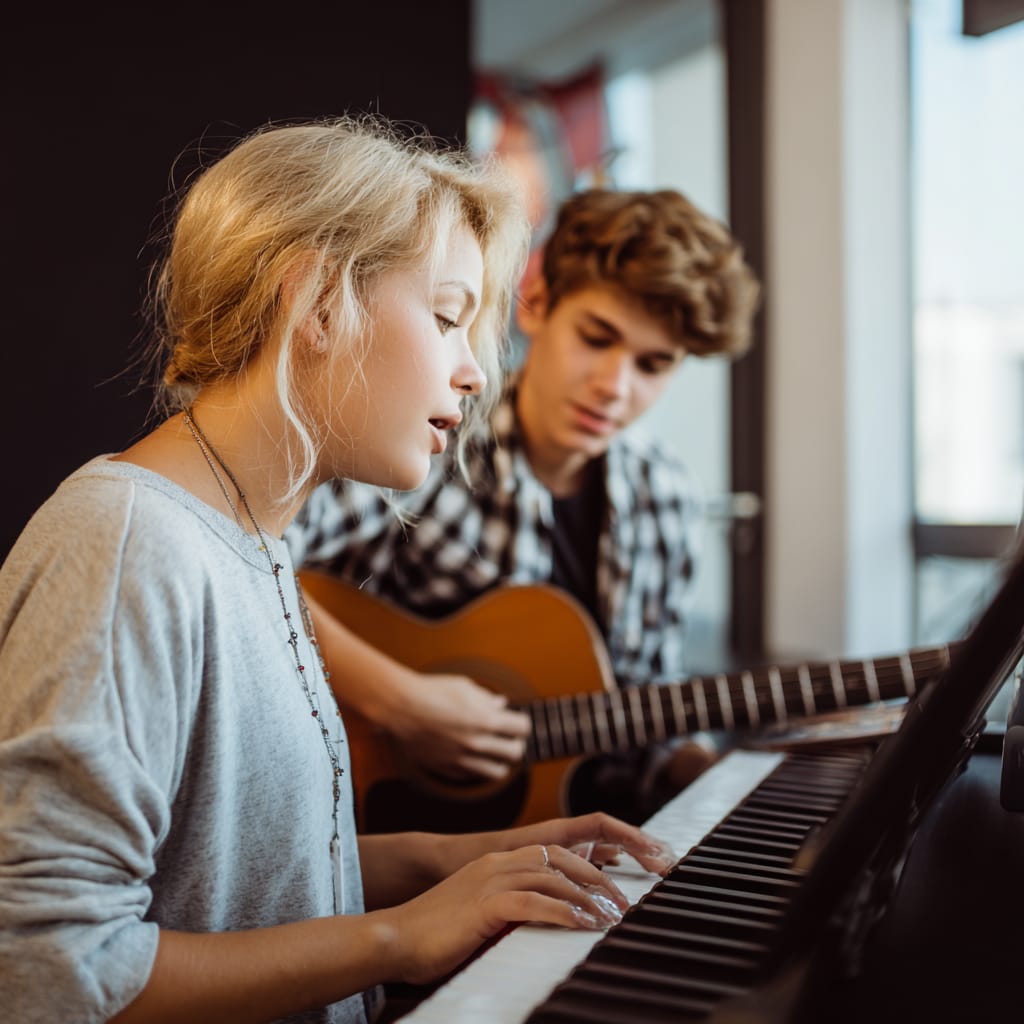
Lena started basic piano lessons—not to become a pianist, but to see music from the inside. At first, it was slow. Her fingers fumbled, and she missed the expressive flow she loved in singing. But then something clicked.
She played the chords to a song she’d been singing for weeks. And suddenly, the harmony wasn’t just “accompaniment”—it had shape. It had direction. For the first time, she felt the tension and release in her handsbefore she sang it with her voice.
She began learning intervals visually, not just by ear. She could transpose simple melodies. And most importantly, she no longer waited for a teacher to play notes for her—she could teach herself.
What Instrument Study Gives a Singer
1. Music Literacy and Independence
When singers learn an instrument, they no longer rely solely on ear or memorization. They can read, write, and understand music on paper, which:
- Speeds up learning
- Reduces rehearsal time
- Allows self-correction and solo practice
- Prepares for music school auditions or exams
2. Deeper Expression Through Harmony
Singers often focus on melody and text. Instruments reveal the harmony behind the melody, helping singers:
- Shape phrasing more musically
- Understand emotional color in chords
- Anticipate key changes and cadences
This leads to more expressive, intelligent performances.
3. Better Collaboration with Accompanists
An instrument-trained singer:
- Communicates clearly in rehearsals (“Let’s start at the second beat of bar 22”)
- Understands tempo and rhythm relationships
- Builds mutual respect with other musicians
- Is easier to conduct and easier to follow
4. Stronger Musicianship for the Long Term
Whether the student continues professionally or not, instrument training helps with:
- Composing or songwriting
- Recording sessions
- Music arranging and production
- Teaching others in the future
And What About the Brain?
Numerous studies show that playing a musical instrument develops brain regions associated with language, memory, and spatial awareness. For singers, whose brains are already processing lyrics, emotion, and pitch, instrument training adds a layer of structure and discipline that sharpens performance across the board.
Final Thoughts: Don’t Sing in the Dark
Lena didn’t stop being a singer when she learned piano. She became a better singer, more confident and more in control of her craft. And years later, when she auditioned for a conservatory, she accompanied herself on the piano—and got in.
If your child or student is learning to sing, encourage them to learn an instrument alongside. It doesn’t have to be advanced. It doesn’t have to be classical. But it should be consistent. Because singing isn’t just about voice—it’s about music.
And to truly speak the language of music, you need more than a beautiful voice.You need fluency. You need understanding. You need the keys beneath your fingers.