The Beautiful Chaos of Mixed-Genre Masterpieces
It starts with a whisper of strings, soft and elegant, as if a symphony is about to unfold. But then a drum kicks in—sharp, electric, undeniably modern—and the music changes course. In that moment, the listener realizes: this is not just classical. It’s not just rock. It’s both. It’s something else entirely.
Some of the most powerful music in history was born not from purity, but from mixture. From the boldness of composers and performers who didn’t ask permission to blend genres—they simply did it. And in doing so, they created works that felt like revolutions in real time.
For many listeners, that first spark comes with the opening of Bohemian Rhapsody. Freddie Mercury, with his operatic drama, rock sensibility, and sense of humor, created a six-minute song that still baffles radio stations today. It begins like an art song, unfolds like a rock ballad, explodes into hard rock, then fades into something like prayer. When Queen released it, there was nothing else like it. Decades later, there still isn’t. It didn’t just mix genres. It mixed emotions, identities, even realities. It was opera and rock and pop and theater, all rolled into one unapologetic anthem.
Long before Mercury lit up stadiums, another genre-blending genius was composing behind dark sunglasses. George Gershwin blurred the lines between jazz and classical music in a way that still sounds bold today. Rhapsody in Blue, with its famous clarinet glissando and swinging piano rhythms, sits perfectly between a smoky jazz bar and a grand concert hall. It wasn’t meant to please just one audience. It was meant to say that jazz belonged everywhere—even on the symphonic stage.
And then there was Leonard Bernstein, whose musical West Side Story stitched together Latin dance rhythms, classical counterpoint, jazz harmonies, and Broadway storytelling. Bernstein didn’t believe in musical walls. He believed in bridges. And every time Tony and Maria sang of longing across those rooftops, those bridges held.
The blending of genres isn’t always about grandeur. Sometimes it happens quietly, experimentally, in bedrooms or cafés. Björk, the Icelandic singer-songwriter, took classical string arrangements and wove them into electronic textures on her album Vespertine. The result? A world that sounded both ancient and futuristic, intimate and vast.
Even now, artists everywhere are bending genres into unexpected shapes. Yo-Yo Ma has played Bach with bluegrass musicians. Radiohead layered classical instrumentation into electronic soundscapes. And students in music schools around the world are asking new questions: What happens when I mix flamenco with jazz? Can I play Baroque music over hip-hop beats? Will a tabla work in a string quartet?
The answer is almost always: yes. If you listen, if you respect both traditions, if you follow the music where it wants to go, the results can be astonishing.
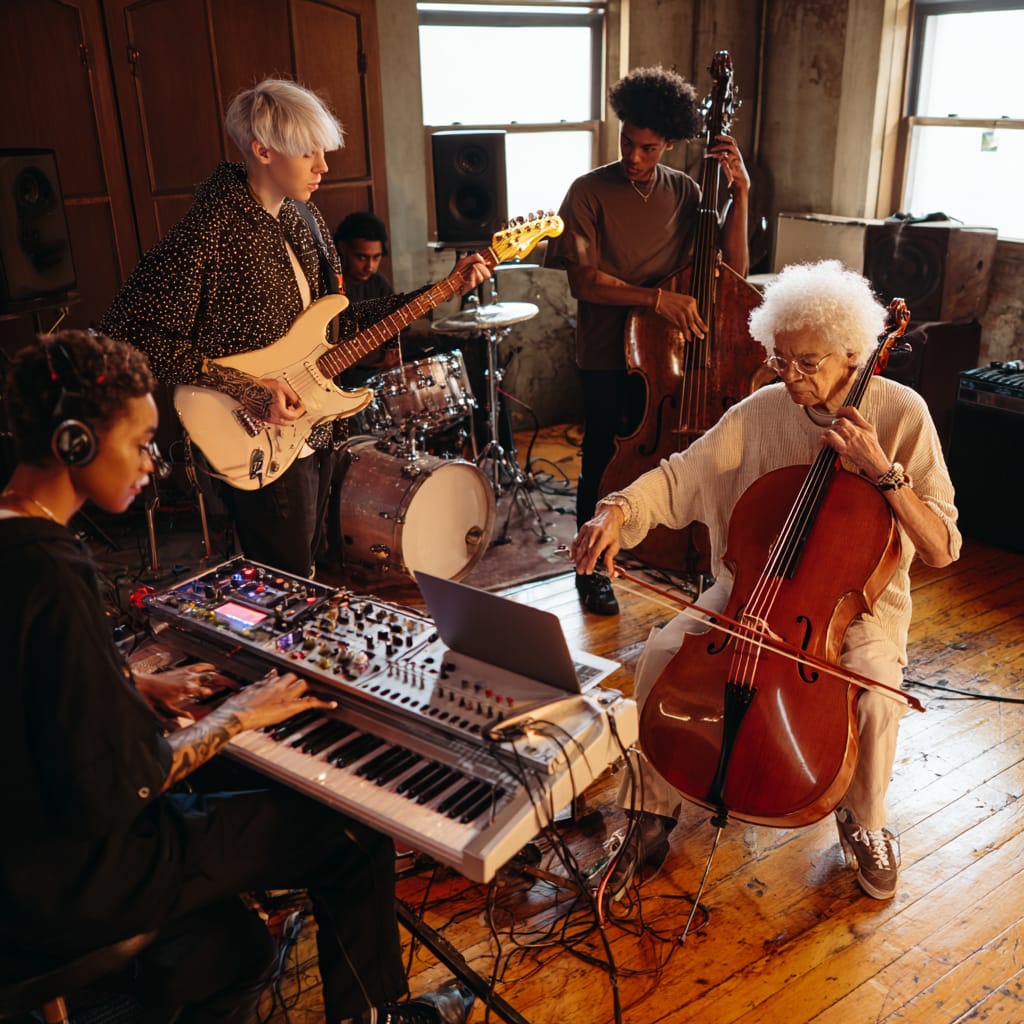
At its heart, mixing genres is about freedom. It’s about not needing to fit into a box. About seeing beauty in what seems opposite. A violin and a synthesizer might come from different worlds—but under the right hands, they can fall in love.
And for students—especially those just beginning to find their musical voices—this idea is thrilling. You don’t have to choose between styles. You can speak multiple musical languages. You can blend your roots with your dreams. You can take the discipline of classical music, the improvisation of jazz, the storytelling of folk, the fire of rock, and build something entirely your own.
Because music, like people, is never just one thing. It evolves. It remembers. It experiments. And when genres collide, when rules are bent just enough to let the soul through—you get music that doesn’t just entertain. It transforms.
So the next time you hear a song that feels strange and familiar all at once, listen closely. That’s genre-mixing. That’s history and future in the same breath. That’s music daring to be more.