Why Playing in an Orchestra Shapes Musicians for Life
Learning to play an instrument is a deeply personal journey. A child practices alone at home, refines skills in private lessons, and slowly masters the language of music. But there comes a point when individual mastery must meet collective sound. That moment begins in the orchestra.
Playing in an orchestra is not just an enrichment activity—it is a cornerstone of holistic music education. Whether for a child just beginning their musical path, a conservatory student, or an adult continuing to play, orchestra experience offers lessons that transcend music itself.
The Orchestra as a Musical Ecosystem
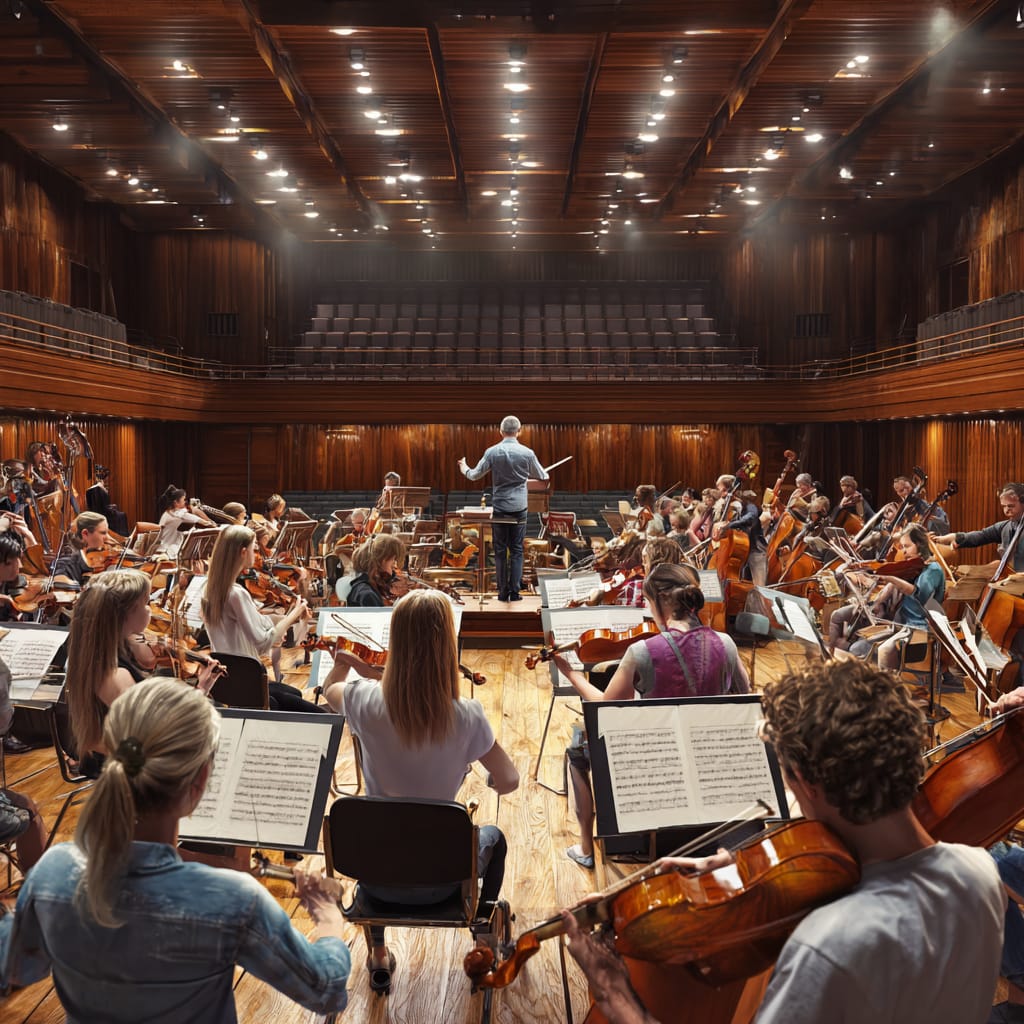
An orchestra is a living, breathing collaboration. Dozens of instruments—strings, winds, brass, percussion—merge their voices into a single, unified work of art.
To play in an orchestra means to:
- Listen deeply to others while performing your own part
- Adapt dynamically to tempo, phrasing, and changes
- Understand musical structure in a broader, more layered context
These experiences accelerate musical growth far beyond what solo practice can provide.
Educational Benefits: Why Every Music Student Needs Ensemble Experience
1. Builds Listening and Timing Skills
In a solo setting, rhythm is personal. In an orchestra, rhythm becomes communal. You must align with a conductor, section, and full ensemble—constantly adjusting microseconds to stay in sync.
Outcome: Students develop a heightened sense of rhythm, pulse, and phrasing.
2. Strengthens Musical Discipline and Responsibility
When you're part of an orchestra, you can’t hide. You must:
- Learn your part on time
- Attend rehearsals consistently
- Arrive prepared, tuned, and focused
This structure builds discipline, accountability, and time management—life skills that benefit school, work, and relationships.
3. Teaches Real-Time Adaptability
If a conductor changes the tempo… you adjust. If the flutes come in too early… you don’t panic. You keep playing, listening, correcting. Orchestra teaches grace under pressure, and how to keep going even when mistakes happen.
4. Develops Emotional Intelligence and Teamwork
Orchestra is a social space. Children learn:
- To be aware of others’ needs
- To take turns leading and supporting
- To read nonverbal cues from a conductor or concertmaster
- To value contribution over competition
These are the same emotional skills needed in professional teams, families, and communities.
5. Deepens Musical Interpretation
Playing only solo pieces limits a child’s exposure to the depth and richness of full scores. In an orchestra, they experience:
- Harmonies between sections
- The emotional impact of dynamic swells
- The tension and release built across instruments
This nurtures artistic maturity and imagination.
Cognitive and Psychological Benefits
Multiple studies confirm that playing in orchestras improves:
- Memory and concentration (due to multi-sensory integration)
- Language processing (especially in children with learning difficulties)
- Stress reduction and emotional regulation
- Sense of belonging and reduced social anxiety
In short, ensemble playing supports brain development and mental health—not just musicianship.
Long-Term Value: Why Adults Should Keep Playing in Ensembles
Orchestra isn’t just for children or aspiring professionals. Many adults—doctors, engineers, teachers, parents—play in community orchestras or chamber groups.
Benefits in Adulthood:
- A creative outlet in high-stress careers
- Lifelong friendships with fellow musicians
- Mental stimulation and memory reinforcement
- A way to give back through performances and cultural participation
Music becomes a lifelong companion—not just a childhood hobby.
What to Look for in a Good Youth Orchestra Program
If you're a parent or student choosing an orchestra, look for programs that offer:
- Supportive conductors who educate, not just direct
- Section coaching to improve instrument-specific skills
- Age-appropriate repertoire that challenges and excites
- Regular performances to build stage confidence
- Opportunities to rotate roles (e.g., principal, soloist, chamber groups)
Ensembles should feel inclusive, structured, and inspiring—not pressured or elitist.
How Music Schools Support Orchestral Education
A serious music school integrates ensemble playing into its curriculum. At [Your Music School Name], for example, students benefit from:
- Beginner orchestras for young children
- Intermediate and advanced ensembles grouped by skill
- Annual concerts that feature full-orchestra, small group, and solo performances
- Cross-instrument collaboration that builds confidence and musical curiosity
- Community music days where parents can join open rehearsals
Ensemble playing isn’t optional—it’s part of the core experience.
Final Thoughts: Why the Orchestra Is More Than a Group
In an age of individualism, orchestra teaches something deeper: that greatness often happens together. Every child deserves the chance to be part of something bigger than themselves—to hear their single note soar because it’s part of a hundred others.
Whether your child dreams of becoming a concert violinist or simply wants to enjoy music for life, ensemble experience will give them the discipline, joy, and connection that solo practice alone cannot.
Because in the orchestra, we don’t just make music.We make meaning—together.