How Music Helps People Survive Anxiety Disorders
Anxiety doesn’t always shout. Sometimes, it hums quietly beneath the surface. It hides in racing thoughts, tight chests, or the compulsion to stay busy. For many who live with anxiety disorders—whether it’s generalized anxiety, panic disorder, social anxiety, or post-traumatic stress—life can feel like a constant tightrope between managing symptoms and simply trying to live.
But in the middle of this invisible struggle, one companion keeps showing up: music.
Not as a cure, not as a miracle—but as a steady presence. A practice. A lifeline.
The Science of Sound and the Anxious Brain
Music has a unique relationship with the human nervous system. It doesn't just distract us from discomfort—it directly affects how our brains and bodies operate. Studies using neuroimaging have shown that listening to or playing music:
- Reduces cortisol levels, the hormone associated with stress
- Activates the parasympathetic nervous system, slowing heart rate and promoting calm
- Stimulates dopamine release, offering a natural mood boost
- Encourages neural plasticity, which supports emotional resilience over time
In other words, music isn’t just “feel-good.” It’s neurobiological support.
And for someone with anxiety, that can mean the difference between spiraling and self-regulating.
Music as a Safe Space for the Mind
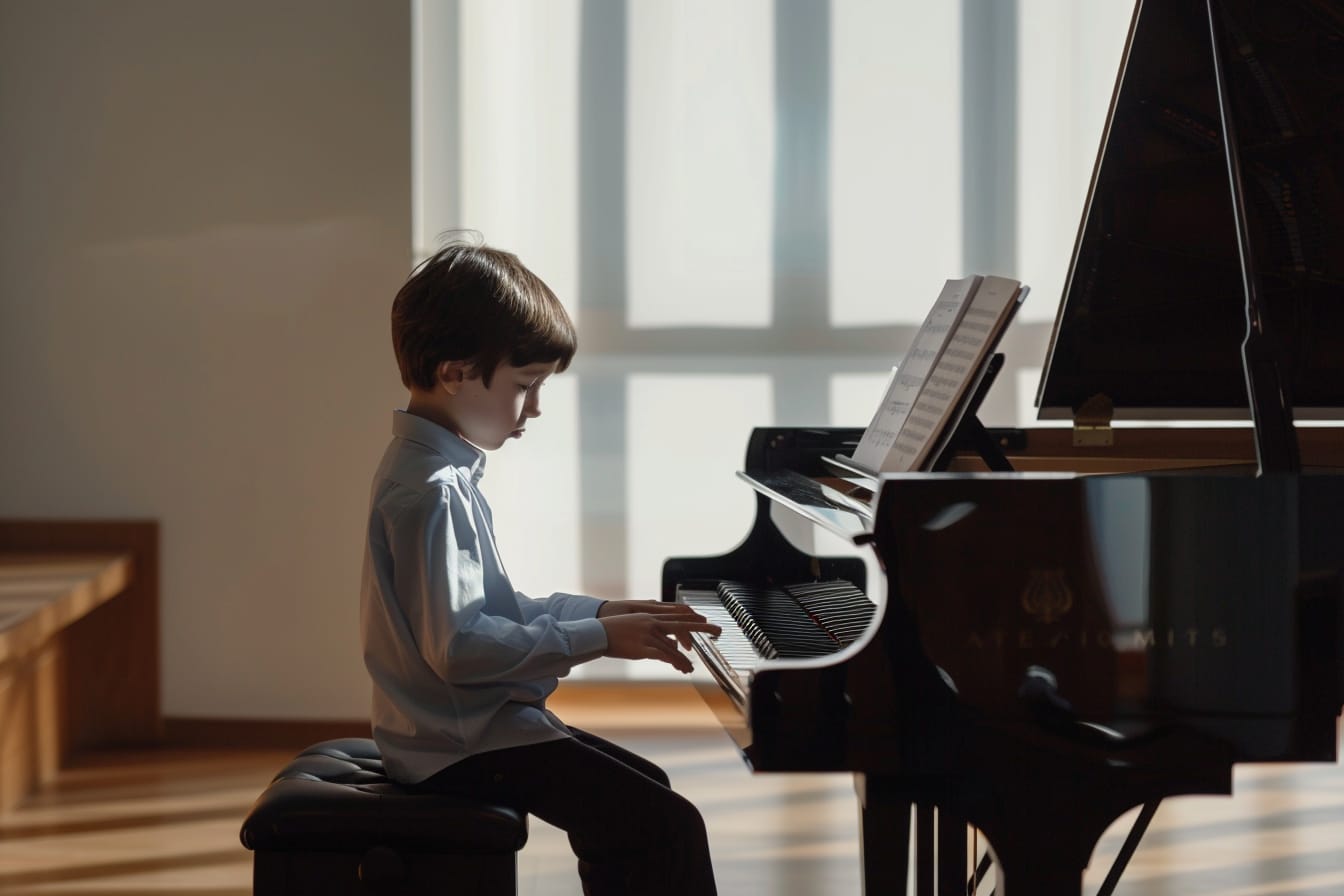
For a child with social anxiety, singing in a music class might seem terrifying at first—but with the right teacher and a supportive environment, it can become a breakthrough moment. For a teen who suffers panic attacks, sitting at the piano after school becomes not just routine, but recovery.
Music creates predictable structure—scales, rhythm, tempo—which helps anchor the brain during unpredictable emotional states. It also gives the anxious mind a focus point: fingers on strings, air through a mouthpiece, sound resonating in the body.
This active concentration helps break the loop of catastrophic thinking or emotional overwhelm. Playing becomes mindfulness in motion.
The Healing Power of Expression
Anxiety is often a result of things left unsaid—emotions too big, fears too raw, thoughts too tangled. Music gives people a language beyond words.
A child who struggles to explain how they feel after a hard day might sit at the keyboard and play a minor chord progression. A violin student may not realize they are expressing grief until they find themselves lost in the slow movement of a sonata.
This non-verbal expression is powerful. It allows release without confrontation. It lets the player feel what they might not be able to say—and that, in itself, can be healing.
Stories Behind the Music
Many well-known musicians have spoken openly about anxiety, including Adele, Barbra Streisand, and Shawn Mendes. But some of the most inspiring stories come from everyday students.
- A 10-year-old with selective mutism began playing cello. Within six months, her parents reported she had started speaking again—at first in whispers, then in sentences.
- A high school percussionist with panic disorder used drumming as her daily grounding technique. She described it as “the only thing that could reset my heart when it went wild.”
- A young adult battling agoraphobia found confidence through singing lessons—starting with virtual sessions and slowly transitioning into in-person classes and open mics.
In each of these stories, music wasn’t therapy in the clinical sense—but it was deeply therapeutic.
Not Just Listening—Creating
While listening to music certainly helps regulate mood and anxiety, playing or composing music multiplies the benefits. That’s because it engages multiple parts of the brain at once:
- Cognitive: learning notes, structure, tempo
- Physical: coordination, breath control, posture
- Emotional: interpretation, connection, release
And in doing so, it gives the anxious brain a way to feel safe, engaged, and productive—all at once.
Music Schools as Mental Wellness Spaces
At a good music school, students aren’t just taught to play—they’re invited to belong. A teacher who notices when a child is withdrawn. A group class where students cheer for each other. A stage where even the shyest learner gets a spotlight.
These experiences offer something more than skill: a sense of agency, which anxiety so often strips away.
In Closing: A Soft Sound in a Loud World
Anxiety may never fully disappear. But music gives those who suffer a space where they can soften its grip. A space that doesn’t demand explanations. A space that welcomes trembling hands. A space that listens back.
So if you know a child—or an adult—who carries the invisible weight of worry, consider handing them an instrument. Or a voice lesson. Or a seat in the back row of the school ensemble.
Because sometimes, surviving anxiety begins not with a diagnosis, but with a single note.