Children move through their days like small storms—bright, wild, quiet, tearful, joyful, exhausted—sometimes all before lunchtime. Their energy and emotions rise and fall unpredictably, and as parents or teachers, we often scramble to keep pace. But what if there were a way to gently shape those rhythms, to guide instead of chase them?
Music may be that way.
Not just something to learn or enjoy—music is a natural regulator. It can lift a sleepy child into motion, soothe a restless spirit into calm, and create structure without force. It’s not magic, but it might feel like it when used intentionally.
Morning: Music That Awakens Without Overwhelming
Getting a child moving in the morning can feel like trying to start a cold engine. But the right kind of music can create a soft signal: it’s time to rise. Upbeat but gentle tunes—acoustic guitar, light percussion, classical string quartets—help activate the nervous system without triggering overstimulation.
Instead of rushing into screen time or chaos, a slow morning playlist becomes part of the routine: breakfast, brushing teeth, a little dance at the table. Rhythm becomes ritual.
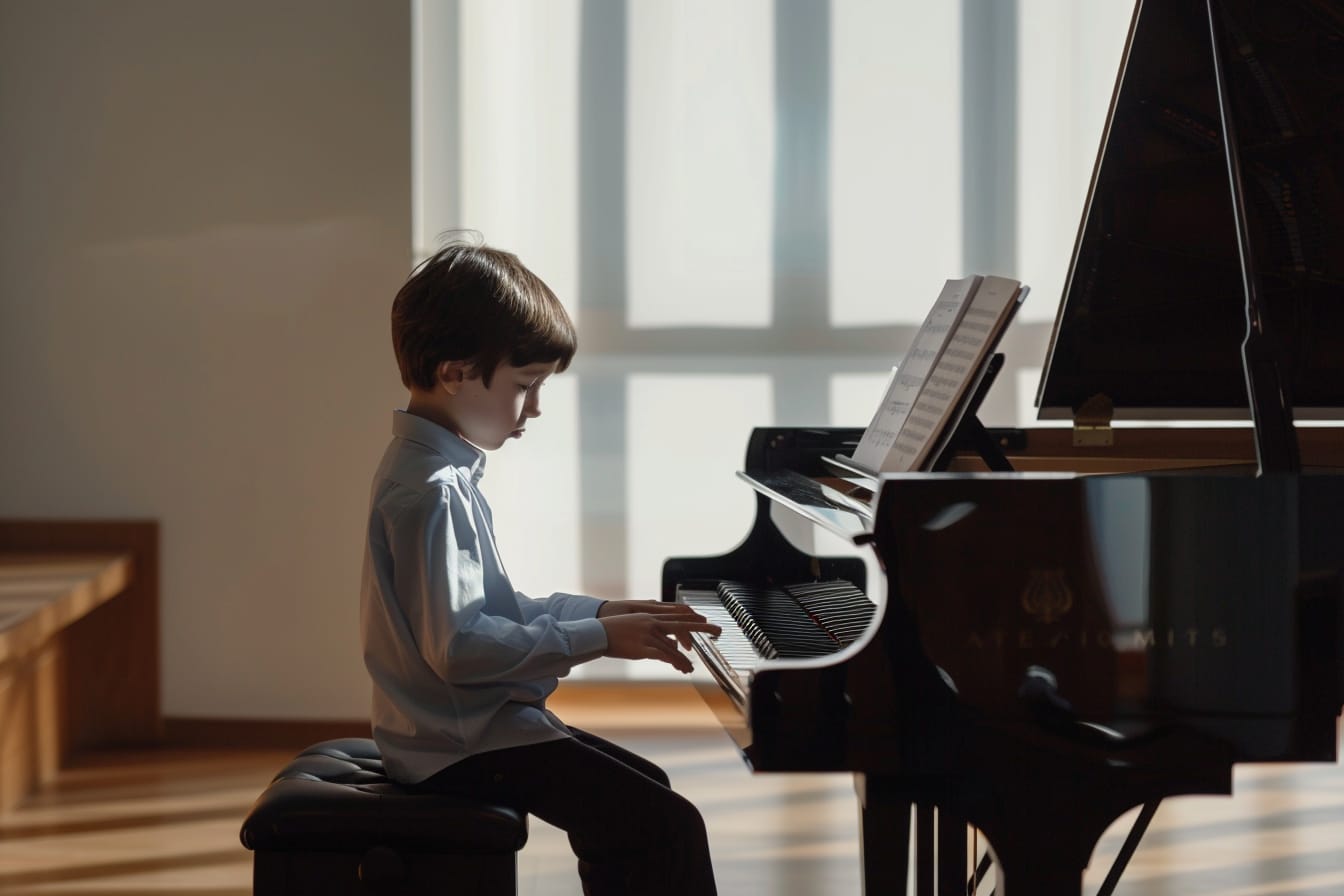
Even better, if the child is learning an instrument, let them play one piece before school. Not to “practice,” but simply to connect to themselves before the world asks too much of them.
Midday: Music as a Focus Anchor
Children often hit emotional peaks and valleys between 10 a.m. and 2 p.m.—especially in learning environments. Their energy might skyrocket after recess or slump right before lunch. Here, instrumental music can serve as an auditory signal to refocus. Classical piano. Film scores. Lo-fi beats. Anything without lyrics that gently steadies the mind.
For homeschooled children or those doing homework, timed music sessions can act as bookends: “Let’s read until this song ends,” or “You can take a break after the next piece.”
If a child studies music formally, this is also a great time for short, playful practice—not drills, but improvisation, exploring tone, or even composing. Engaging with music in these middle hours creates a mental “reset,” especially when focus has started to drift.
Afternoon: Releasing Energy With Rhythm
After school, children often explode with untapped motion. Music gives that energy shape. A rhythm-based activity—drumming on a table, clapping games, dancing to pop songs—can help channel hyperactivity into coordination.
Even formal practice at this time, if approached playfully, is effective. A student returning to the cello or trumpet might not need structure—they need freedom to experiment. Let them play whatever they want. Play fast. Play loud. Let them express.
This period of the day is where music stops being calming and becomes cathartic. And that’s just as valuable.
Evening: Returning to Stillness
As dinner ends and bedtime nears, the nervous system needs help slowing down. The right music becomes a bridge from stimulation to rest.
Lullabies aren’t just for babies. A simple melody, a few notes on a keyboard, or a slow duet with a parent can become part of a powerful sleep ritual.
Students can be encouraged to play a calming piece themselves as part of “winding down.” For some children, this will be the only moment in their day when they are still and self-aware—and it gently conditions the body to associate music with comfort and safety.
Even simply listening to a curated “night playlist” has shown measurable improvements in sleep onset, emotional regulation, and nighttime anxiety.
When Music Becomes Emotional Literacy
Beyond regulation, music helps children name and understand their emotions. A sad song teaches them to sit with sorrow. A triumphant melody sparks joy. A minor scale evokes mystery. Over time, children begin to say things like, “This song sounds like how I felt when I missed my friend,” or, “I want to play this one when I’m mad.”
And in those moments, music becomes more than sound—it becomes self-knowledge.
In Conclusion: One Day, One Soundtrack
Parents often ask, “How can I help my child manage their moods?” or “How can I bring more calm into our routine?” And while every child is different, music is an often-overlooked tool that works quietly, gently, and consistently.
When music becomes a thread woven through the day—waking, focusing, moving, resting—it doesn’t just regulate a child’s energy. It supports their growth.
Because a child who learns to regulate with rhythm learns to live with resilience.