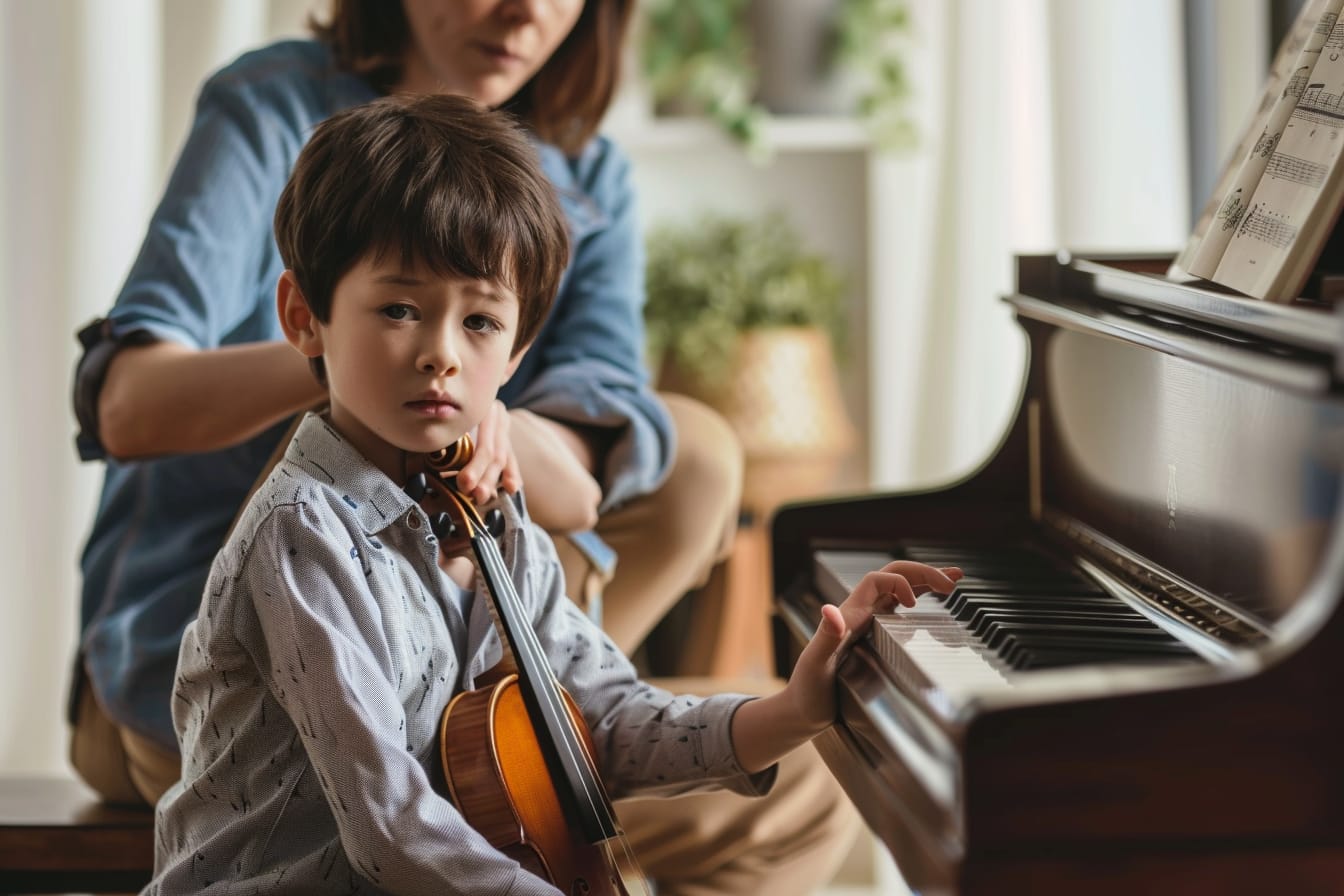

A Practical Guide for Students and Parents
Learning a new piece of music can be an exciting and fulfilling experience for a child—but it can also feel overwhelming without the right structure. Whether preparing for a recital, an exam, or simply building skill and confidence, the approach to learning matters just as much as the amount of practice time.
This guide, based on professional teaching methods and music education research, walks you through practical strategies for learning and memorizing music, how many hours a child should practice each day, and how parents and teachers can support the process.
Why Structured Practice Beats “Just Playing It Again”
Many students (and even some parents) believe that progress comes from simply playing the piece repeatedly. While repetition is important, mindless repetition leads to slow improvement, frustration, and weak memorization.
Structured, mindful practice results in:
- Faster learning
- Deeper understanding of the music
- More secure memory during performance
- Greater confidence and musical expression
Step-by-Step: How to Learn a Music Piece Effectively
Step 1: Listen First
- Before even playing a note, listen to professional recordings of the piece multiple times.
- Follow along with the sheet music while listening.
- Identify the form, recurring themes, tempo changes, and mood.
Why this matters: It builds an internal model of the music in your mind—making playing more intuitive later.
Step 2: Break It Into Sections
- Divide the piece into logical, bite-sized sections (e.g., 4–8 measures).
- Label each section (A, B, C) and focus on one section per practice session.
- Practice slowly and accurately from day one—do not “learn mistakes” you’ll need to correct later.
Step 3: Hands Separately (for Pianists and Multi-Manual Instruments)
- Practice each hand alone to build muscle memory and coordination.
- Focus on the trickier hand first. Don’t rush to combine hands before both are solid individually.
Step 4: Use the “3x Rule”
Play a small passage three times correctly in a row before moving on. If you make a mistake, start the set again.
Why this works: It builds consistency, not luck.
Step 5: Focus on the Hardest Spots
- Don’t start from the beginning every time. Instead, target the parts that cause the most trouble.
- Use slow motion, rhythmic variations, and looping techniques to fix difficult passages.
Step 6: Add Expression Early
- Even while still learning notes, think about phrasing, dynamics, and tone.
- This makes memorization more natural because you’re associating musical meaning—not just mechanical motions.
Step 7: Use a Practice Journal
Keep track of:
- Which sections you practiced
- What worked or didn’t
- Any memory slips or problem spots
- What to focus on tomorrow
This builds awareness and avoids wasted time.
How to Memorize Music (Without Panic)
Memorizing music isn’t about “remembering every note.” It’s about building layers of memory:
1. Aural Memory
- Can you hum or sing the melody from memory?
- This is your internal soundtrack and helps immensely during slips.
2. Visual Memory
- Close your eyes and “see” the sheet music or finger positions.
- This helps with orientation in the middle of the piece.
3. Motor (Muscle) Memory
- Comes from repeated, accurate playing.
- Strong, but fragile under stress—needs reinforcement from other types.
4. Analytical Memory
- Do you understand the piece’s structure?
- Knowing, “I’m in the second theme, measure 12, just before the modulation,” gives you mental anchors.
5. Story-Based Memory (for children)
- Attach a story or mood to each section (e.g., “The sneaky fox section,” or “The storm part”).
- It helps young students stay emotionally connected and remember the flow.
How Many Hours a Day Should a Child Practice to Learn and Memorize a Piece?
Ages 5–7 (Beginners):
- 15–20 minutes/day
- Focus: short sections, repetition, play-based learning
Ages 8–10 (Early Intermediate):
- 30–40 minutes/day
- Focus: structure, hand coordination, basic memory development
Ages 11–13 (Intermediate):
- 45–60 minutes/day
- Focus: independence, expression, memorizing full pieces
Teens and Advanced Students:
- 60–90 minutes/day
- Focus: refinement, repertoire building, preparing for performances and exams
Reminder: Practicing smarter is better than practicing longer. A focused 30-minute session with clear goals is far more effective than 60 minutes of casual playing.
Role of the Teacher and Parent
Teachers Should:
- Assign clear, small goals for each week
- Teach practice strategies, not just the piece
- Encourage memorization step-by-step
- Check memory with fun quizzes (“Play from the middle!”)
Parents Should:
- Create a quiet, consistent space and time for practice
- Encourage without pressure
- Be present during early practice sessions to keep things on track
- Celebrate effort, not just perfection
Final Thoughts: Practice is a Skill in Itself
Learning and memorizing music isn’t about talent—it’s about process. When a child learns how to practice, they become not just a better musician, but a more patient, focused, and confident learner in all areas of life.
At [Your Music School Name], we don’t just teach children to play notes—we teach them how to learn, step by step, with patience and purpose. Our students don’t just memorize music—they understand it, love it, and make it their own.