A Complete Guide for Parents
Every parent who supports their child’s music education eventually faces the same question: “How much should my child practice each day?”
There’s no one-size-fits-all answer. The ideal practice time depends on a child’s age, experience, instrument, goals, and emotional readiness. Practicing too little can slow progress, while practicing too much can cause burnout or even injury.
This guide explores expert recommendations, developmental psychology, and practical tips to help parents set healthy, effective practice routines for young musicians.
1. The Role of Practice in Music Learning
Practicing music develops:
- Technical Skills: Finger dexterity, breath control, rhythm precision.
- Muscle Memory: Repetition builds automaticity in playing.
- Musicality: Dynamics, expression, and phrasing emerge over time.
- Confidence: Familiarity with pieces reduces stage fright.
Regular practice is essential, but quality always outweighs quantity. Ten focused minutes can be more beneficial than an hour of distracted playing.
2. Practice Time by Age
Ages 3–5: Musical Play and Exploration
- Recommended time: 5–15 minutes daily.
- Focus: Singing, rhythm games, simple keyboard or percussion exploration.
- Goal: Building love for music, basic coordination, and listening skills.
- Tip: Keep sessions short, playful, and free of pressure.
Ages 6–9: Early Beginners
- Recommended time: 15–30 minutes daily.
- Focus: Learning fundamentals (notes, scales, posture), building focus.
- Goal: Developing consistent habits without overwhelming the child.
- Tip: Break sessions into smaller segments (e.g., two 15-minute sessions).
Ages 10–12: Growing Independence
- Recommended time: 30–45 minutes daily.
- Focus: Improving technical skills, starting more challenging pieces.
- Goal: Encouraging self-directed practice and discipline.
- Tip: Include warm-ups, scales, and a mix of old and new pieces.
Teens (13+): Intermediate and Advanced Students
- Recommended time: 45–90 minutes daily.
- Focus: Advanced technique, ensemble rehearsals, preparing for recitals or exams.
- Goal: Refining artistry, building stamina for performances.
- Tip: Split time between technique, repertoire, sight-reading, and creative exploration (improvisation or songwriting).
3. How Instrument Type Affects Practice Time
- Piano / Strings: Require regular, shorter sessions to strengthen coordination and avoid fatigue.
- Wind / Brass: Sessions may be shorter due to breath control limits but more frequent.
- Percussion: Often involves stamina building, so moderate practice lengths are ideal.
- Voice: Should be limited to avoid vocal strain, especially for young children (short, frequent sessions preferred).
4. The Psychology of Practice
- Attention Span: Young children naturally have short focus periods; long sessions can cause frustration.
- Motivation: Practice should feel rewarding, not like punishment. Gamified practice charts or small rewards can help.
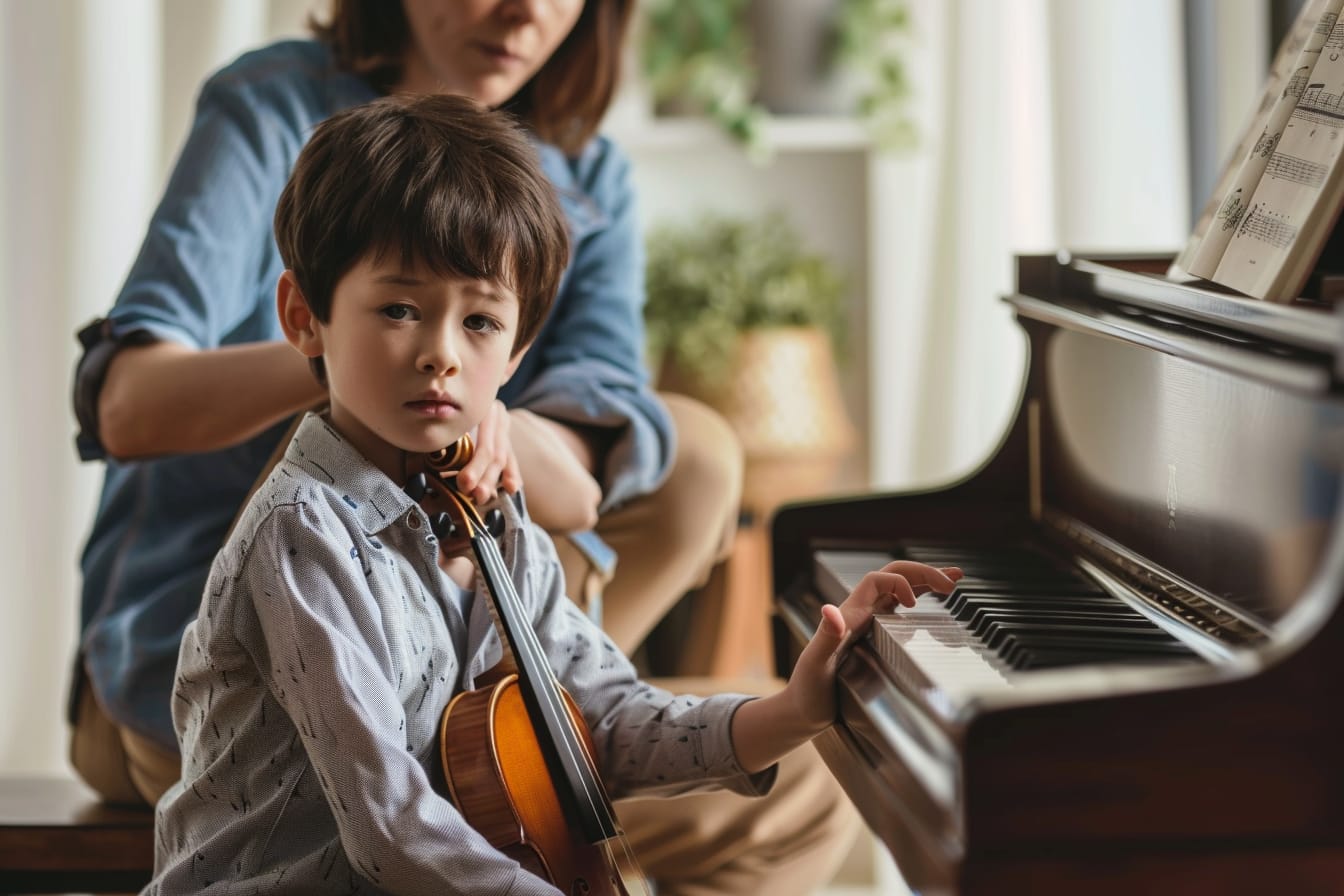
- Parental Involvement: Especially for beginners, parents should supervise or participate to maintain structure and encouragement.
5. Dangers of Over-Practicing
- Physical Strain: Injuries like tendonitis can occur from excessive or poorly guided practice.
- Mental Burnout: Children may lose enthusiasm if pressured into long sessions.
- Imbalance: Overemphasis on music can interfere with schoolwork or playtime, leading to resentment.
Rule of Thumb: Practice should challenge the child but still leave them excited to return the next day.
6. Setting Goals for Practice
The number of hours matters less than how goals are structured:
- Warm-up (scales, exercises): 20–30% of time
- Practice known pieces: 30–40% of time
- Learn new material: 30–40% of time
Clear, achievable daily goals (e.g., “play this section three times correctly”) make practice more efficient than mindless repetition.
7. Preparing for Competitions or Exams
- Increased Time: Advanced students preparing for recitals may practice 2–3 hours a day.
- Supervision: Teachers should guide intensity and ensure proper technique to avoid injury.
- Breaks: Frequent short breaks are crucial during extended practice periods.
8. Role of Music Schools and Teachers
Professional music schools help families find the right balance:
- Tailored Practice Plans: Adjusted to each child’s level and instrument.
- Progress Monitoring: Teachers spot when practice is too little or too much.
- Motivational Tools: Recitals, group lessons, and practice journals make routines enjoyable.
A supportive school environment helps children develop healthy, lifelong practice habits.
Conclusion: The Right Practice Time Is Personalized
While guidelines provide a starting point, every child is unique. The ideal practice time:
- Fits the child’s age and maturity.
- Matches instrument demands.
- Encourages steady improvement without pressure.
- Leaves room for fun, creativity, and balance in life.
Music should inspire, not exhaust. With guidance from a dedicated teacher and supportive parents, practice becomes not just a routine, but a joyful journey toward mastery.