Why Early Music Education Shapes a Brighter Future
When parents think of music education for their child, they often imagine piano lessons or learning to sing favorite songs. But behind every skilled musician is a fundamental practice called solfeggio—a structured method of teaching pitch, rhythm, and musical literacy.
Solfeggio is far more than just singing “Do-Re-Mi.” Scientific studies show that it enhances cognitive, emotional, and social development, giving children skills that extend far beyond music. If you’ve ever wondered whether enrolling your child in a music school is worth it, understanding solfeggio’s impact can make the decision clear.
What Is Solfeggio?
Solfeggio is a music education method where students learn to:
- Recognize and sing notes using syllables (Do, Re, Mi, Fa, Sol, La, Ti).
- Understand rhythm, pitch intervals, and melodies.
- Develop sight-reading and ear training skills.
This foundational training is taught in most professional music schools worldwide and is often considered the language of music. Just as children learn letters before reading books, solfeggio teaches them to hear and think in music before mastering an instrument.
1. Cognitive Development: Training the Brain Like a Gym
Studies from Harvard University and the University of California show that early musical training, particularly solfeggio, strengthens brain areas linked to memory, language, and problem-solving.
- Enhanced Working Memory: Learning pitch sequences and rhythmic patterns improves the ability to retain and process information—skills crucial for mathematics and reading comprehension.
- Improved Language Skills: Solfeggio sharpens auditory discrimination, making it easier for children to distinguish speech sounds, leading to better pronunciation and vocabulary.
- Superior Math Skills: Music and math share neural pathways. Recognizing rhythmic patterns and note relationships boosts understanding of fractions and proportions.
“Music education physically develops the part of the left side of the brain known to be involved with processing language,” says Dr. Gottfried Schlaug, Director of the Music and Neuroimaging Lab at Harvard Medical School.
2. Emotional Intelligence: Building Confidence and Expression
Solfeggio gives children tools to express emotions safely and creatively. Singing solfeggio exercises and understanding melody trains emotional perception:
- Recognition of Emotional Tones: Children become more sensitive to subtle changes in voice and sound, fostering empathy and emotional awareness.
- Self-Confidence: Performing solfeggio exercises in front of peers teaches public speaking skills and resilience.
- Stress Reduction: Music-making lowers cortisol levels, helping children handle stress and develop emotional stability.
Dr. Nina Kraus from Northwestern University explains, “Musical training fine-tunes the nervous system, sharpening sensitivity to emotions in sound and enhancing communication skills.”
3. Academic Performance: Higher Achievement Across Subjects
Research published in the journal Nature Neuroscience demonstrates that children with early solfeggio or music education:
- Score higher on standardized tests in reading and math.
- Show advanced problem-solving abilities.
- Exhibit improved focus and discipline in academic tasks.
This is because solfeggio exercises train attention control—children must listen carefully, process sounds quickly, and reproduce them accurately, mirroring the skills needed for success in school.
4. Social and Communication Skills: Learning to Collaborate
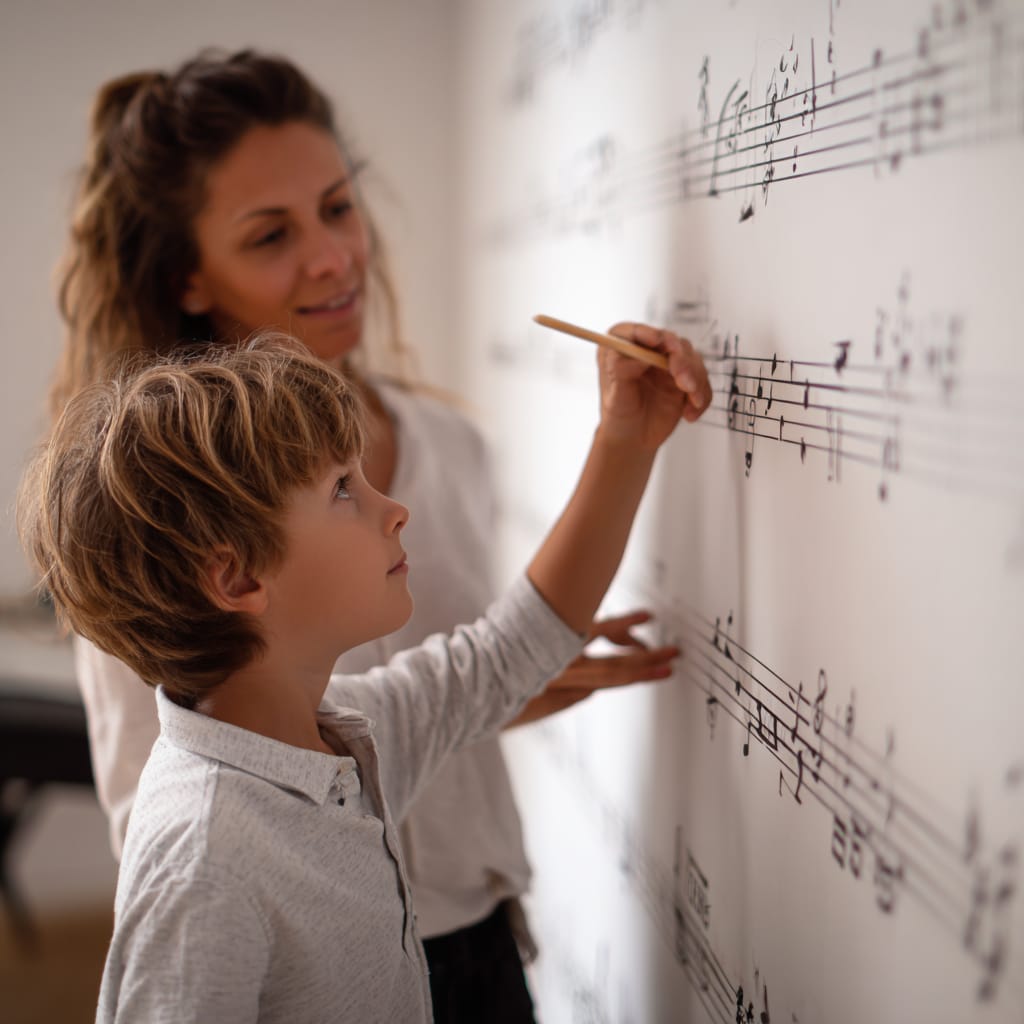
Solfeggio classes are often taught in groups, allowing children to:
- Listen actively to others.
- Coordinate timing and pitch in ensemble singing.
- Develop leadership by guiding peers through exercises.
These collaborative settings teach patience, cooperation, and social confidence. Studies from the University of British Columbia found that children in music programs are more likely to show advanced social behavior and stronger peer relationships.
5. Long-Term Musical Ability: Building a Strong Foundation
Children who learn solfeggio early find it easier to:
- Pick up new instruments quickly.
- Read complex sheet music fluently.
- Compose and improvise their own music confidently.
Professional musicians often say, “Without solfeggio, music feels like memorizing sounds; with solfeggio, music becomes a language you speak.”
This foundation allows children to explore any instrument or genre with agility, setting them up for lifelong enjoyment and mastery of music.
When to Start Solfeggio Training
Experts recommend starting solfeggio lessons between ages 4 and 7. At this age:
- Children’s auditory systems are highly adaptable.
- They are naturally curious about sounds and singing.
- Their cognitive and motor skills are ready for structured learning.
Even if your child is older, starting solfeggio at any age builds significant skills—but earlier exposure maximizes brain development and confidence.
Why a Music School Is the Best Environment
While parents can sing solfeggio exercises at home, a dedicated music school provides:
- Professional Teachers: Specialists who understand child psychology and music pedagogy.
- Structured Curriculum: Progressive lessons that match developmental stages.
- Peer Learning: Motivation from classmates and group exercises.
- Performance Opportunities: Regular recitals that boost confidence and communication skills.
Music schools create an environment where solfeggio becomes fun and inspiring rather than just another academic task.
Conclusion: Solfeggio Shapes Future Leaders, Not Just Musicians
Solfeggio isn’t simply about singing scales—it’s a scientifically supported method that enhances intelligence, emotional growth, academic success, and social skills. Enrolling your child in a music school that emphasizes solfeggio gives them far more than music lessons: it opens a pathway to holistic development, discipline, and joy.
If you’ve ever wondered whether music education is a worthwhile investment, remember this: children who learn solfeggio don’t just make music—they develop minds and hearts finely tuned for life’s challenges.