A Science-Based Guide for Parents
Many parents wonder when the right time is to introduce their child to music lessons. Is it too early at four years old? Too late at eight? Research in child development and neuroscience gives us a clear and inspiring answer: the earlier you nurture musical exposure, the stronger the benefits for your child’s brain, emotions, and social growth.
Early Musical Sensitivity: It Starts Before Birth
Studies from the University of Helsinki and other research centers show that fetuses can hear sounds starting from the 24th week of pregnancy. Babies recognize their mother’s voice and even respond to melodies played repeatedly before birth. This means that a child’s musical journey can begin long before formal lessons—with simple humming, singing, and music exposure at home.
The Critical Window for Music Education
Ages 0–3: Musical Play
From birth to age three, children are like sponges, absorbing sounds and rhythms. According to Dr. Edwin Gordon’s Music Learning Theory, this is the audiation stage—the brain’s ability to understand and process music internally.
How to nurture it:
- Sing nursery rhymes.
- Use simple rhythm instruments (shakers, tambourines).
- Dance together to different genres.
No structured lessons are necessary at this stage—just playful, daily musical interaction.
Ages 3–5: Music Readiness Programs
By age three or four, many children are ready for group music classes designed to build rhythm, listening skills, and coordination. Programs like Suzuki Early Childhood Education and Kindermusik are specifically crafted for this developmental stage.
Skills developed:
- Listening and imitating sounds.
- Basic rhythm patterns and beat recognition.
- Singing in tune with others.
Research from the McMaster University Institute for Music and the Mind shows that toddlers in music classes have better communication skills, social behavior, and brain responses to music compared to peers without such exposure.
Ages 5–7: Instrument Introduction
Many music educators recommend starting formal instrument lessons between ages five and seven. At this age, children typically have:
- Improved finger strength and motor coordination.
- Longer attention spans (15–30 minutes).
- Early reading skills helpful for music notation.
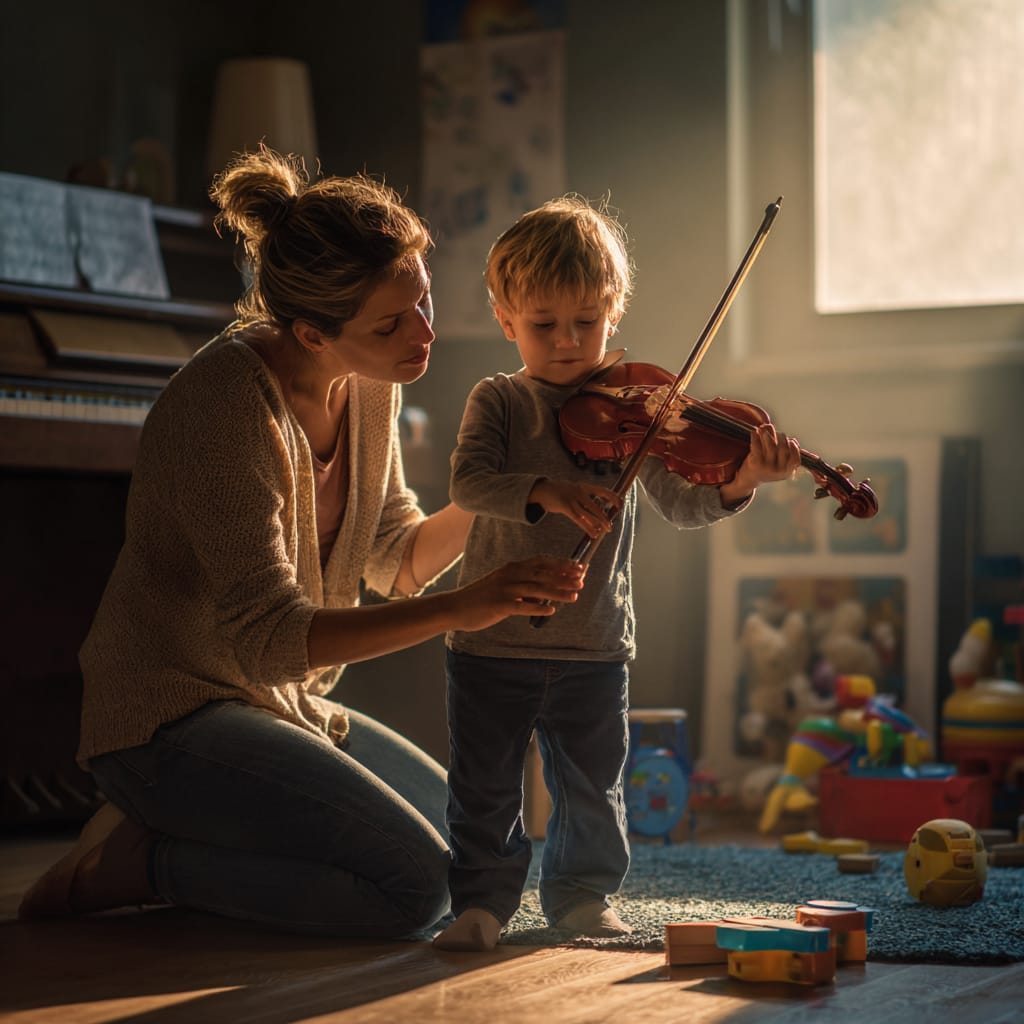
The Suzuki Method, one of the most successful approaches worldwide, often starts violin or piano lessons at age 3–4, focusing on learning by ear before reading sheet music. Dr. Shinichi Suzuki believed that just as children naturally learn language early, they can learn music the same way—with immersion and encouragement.
Why Early Music Lessons Matter
Brain Development
Neuroscientific studies, including those from Harvard and MIT, show that early music training:
- Strengthens neural connections linked to language, math, and memory.
- Enhances auditory processing and fine motor skills.
- Increases IQ and problem-solving abilities over time.
Emotional Intelligence
Playing music teaches children to express feelings, understand emotions, and develop empathy—qualities that are foundational for strong relationships.
Confidence and Discipline
Music education builds patience, focus, and the rewarding feeling of achieving goals through practice—skills that extend far beyond music itself.
Overcoming Common Fears
Some parents worry about starting too early or pushing too hard. Experts reassure that:
- Music education should be playful, encouraging, and age-appropriate.
- Children are naturally curious—lessons should nurture, not pressure.
- If a child shows resistance, try group classes or different instruments before deciding they’re “not musical.”
The Role of a Music School
A professional music school offers:
- Qualified teachers trained to work with young learners.
- Structured programs tailored to developmental stages.
- Peer interaction that motivates children through shared experiences.
- Exposure to multiple instruments, helping find the perfect fit.
Even if you start with short, fun lessons, the structured environment sets a foundation for lifelong learning.
Conclusion: The Best Time Is Now
From prenatal melodies to toddler rhythms and preschool music classes, music can be part of your child’s life from the very beginning. While formal instrument lessons often begin around ages 5–7, introducing your child to a music school earlier can spark curiosity, develop skills, and unlock cognitive and emotional benefits that last a lifetime.
If you want your child to gain confidence, creativity, and a deeper connection to art, now is the perfect time to explore your local music school. The earlier the start, the richer the journey ahead.