The Evolution of the Modern Piano
After Bartolomeo Cristofori invented the first piano in the early 1700s, he passed the torch to generations of instrument makers who would push the piano’s limits—stretching its body, strengthening its frame, refining its sound, and shaping it into the centerpiece of musical life. The modern piano—whether upright or grand—is the product of centuries of design, technology, and cultural change.
Let’s take a journey through time and see how Cristofori’s quiet revolution grew into a global musical force.
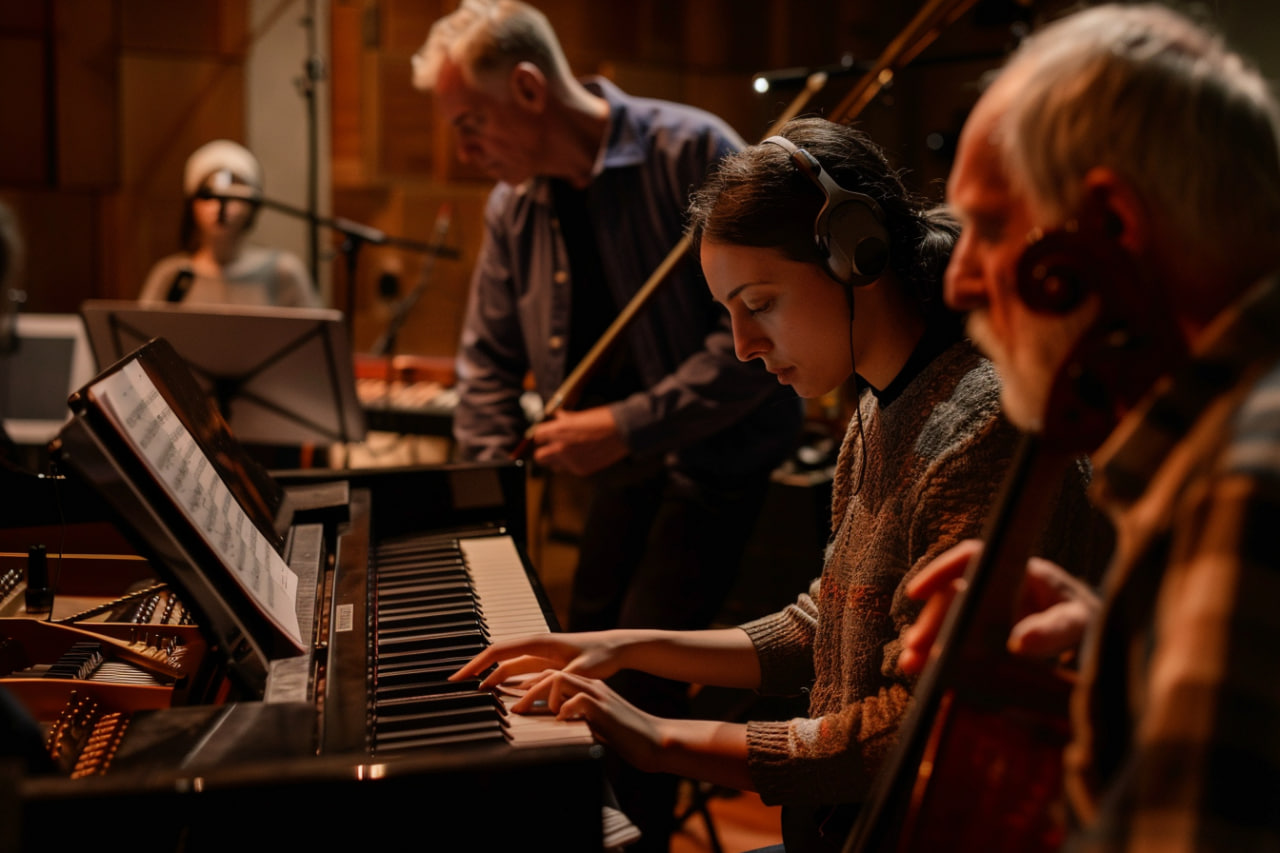
Cristofori’s early pianos had only 54 keys and a light, delicate tone—far quieter than today’s instruments. But the potential was there. By the mid-1700s, piano makers in Germany and Austria began experimenting with different hammer actions, heavier strings, and more durable frames.
Johann Andreas Stein, for instance, developed the “Viennese action,” which offered a lighter touch and became the preferred style for composers like Mozart. Meanwhile, the piano was slowly replacing the harpsichord in both private homes and professional compositions. By the time Ludwig van Beethoven began composing for piano in the late 1700s, the instrument had already become bolder, louder, and more dynamic. And Beethoven’s music demanded even more.
The 1800s saw the piano explode in size, volume, and popularity. This was the Golden Age of Romanticism, and pianists needed instruments that could thunder through concert halls and sing softly in salons.
Key innovations included:
✓ Cast-iron frames replacing wooden ones, allowing strings to be stretched with far more tension.
✓ Steel wire strings (instead of brass), increasing durability and brightness of tone.
✓Extended keyboards, growing to 88 keys by the late 1800s (which remains standard today).
✓ Cross-stringing (overstringing) to improve resonance and space efficiency in upright models.
Piano makers like Érard (France), Blüthner (Germany), and Broadwood (England) were all part of this industrial boom. But it was Steinway & Sons, founded in New York in 1853 by German immigrant Heinrich Steinweg (later Henry Steinway), that perfected the modern grand piano’s design. Steinway’s innovations, such as the duplex scale system and rim-bending process, set a new global standard—still followed by most modern grand piano manufacturers toda
Not every home could fit a grand piano. That’s where the upright piano—also called the vertical piano—came in. As early as the late 1700s, compact designs were being tested, but by the mid-1800s, upright pianos became refined and reliable. The upright piano was a social game-changer: now middle-class families could afford to bring music into their living rooms. In fact, for much of the 19th and early 20th centuries, owning a piano was seen as a sign of culture, education, and refinement. Companies like Bechstein, Schimmel, and Yamaha later became famous for upright models that offered rich tone in compact form.
The 1900s brought with them a musical revolution—one powered by electricity. Though it didn’t replace acoustic pianos, the electric piano (like the Fender Rhodes) and later digital keyboards became essential tools for jazz, pop, and rock musicians. Still, grand and upright pianos continued to be built to exquisite standards. Today’s premium brands—Steinway, Bösendorfer, Yamaha, Fazioli, Kawai, Shigeru Kawai—blend centuries-old craftsmanship with digital precision. Some even combine acoustic soundboards with silent practice features, MIDI capabilities, and built-in recording tech. For concert halls, nothing rivals the thunder and delicacy of a concert grand. For homes and schools, uprights remain timeless, adaptable, and powerful.
When a child or adult sits down at a modern piano, they’re not just playing notes—they’re touching the result of over 300 years of innovation, artistry, and human imagination. Understanding this history gives new weight to each key pressed, each phrase phrased. It’s a reminder that the piano didn’t fall from the sky perfect. It was crafted and cared for across centuries—by builders, composers, and performers who believed that music should be expressive, emotional, and accessible. Today, whether your student plays a concert grand or a compact upright in a cozy apartment, they are continuing that legacy.